
How to Capture More Leads at Dubai Exhibitions and Networking Events
Dubai exhibitions offer valuable opportunities to meet potential customers, partners, and business leaders. But collecting business cards is only the beginning. Discover practical ways to capture qualified leads, organise contacts, follow up effectively, and turn meaningful networking conversations into lasting business relationships.
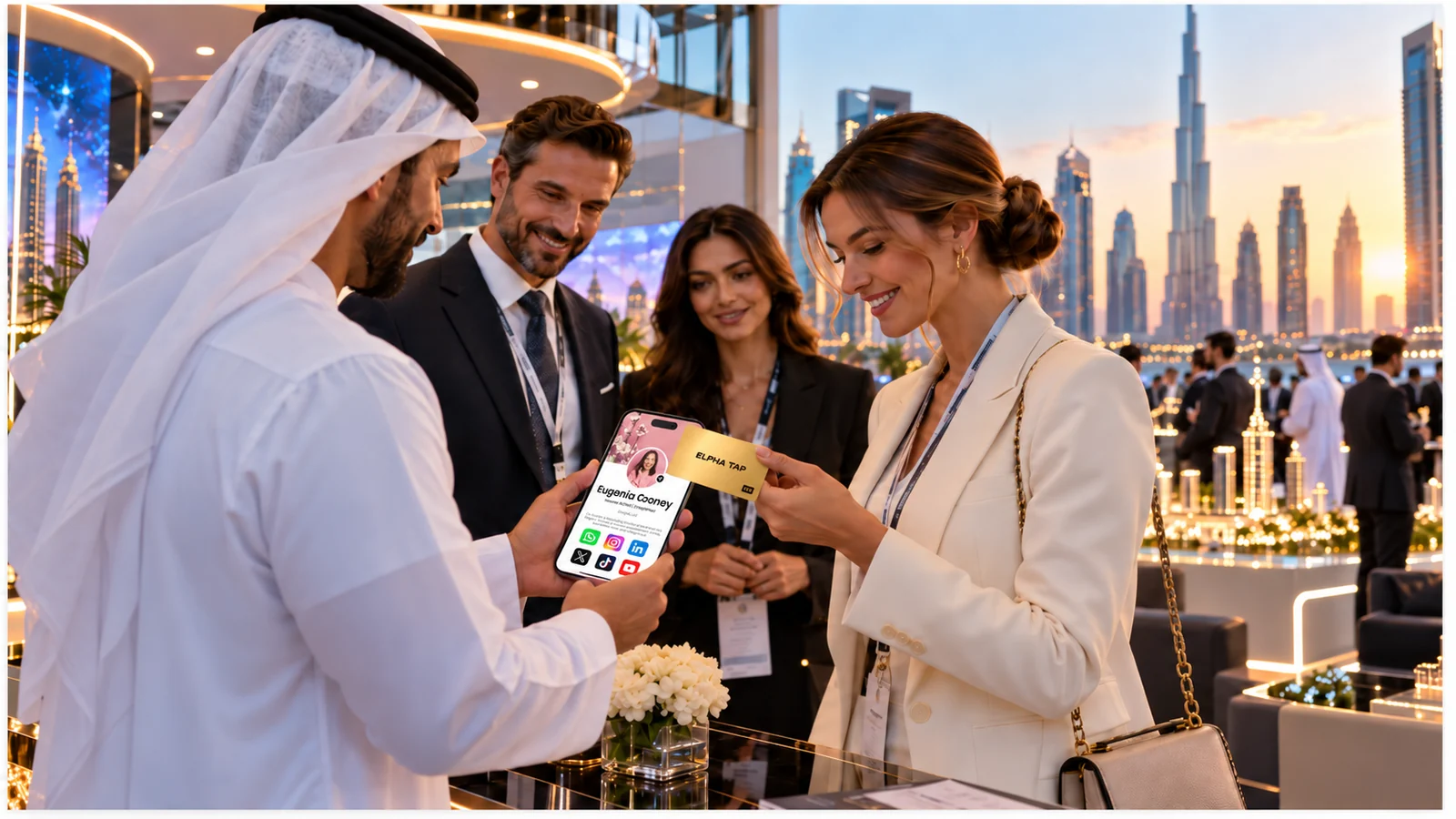
You've just spent three days at an exhibition in Dubai. Your team has spoken to potential customers, met business owners and exchanged more business cards than anyone can count.
It feels like a successful event.
Then Monday morning arrives.
Someone asks about the client who wanted a quotation. Another colleague remembers a company interested in a product demonstration, but nobody saved the right contact details. A few business cards are still sitting in a jacket pocket.
Sound familiar?
It's surprisingly easy to meet the right people at an exhibition and still lose the opportunity afterward.
That's why
Dubai exhibition lead generation should be about more than filling a contact list. What matters is who you meet, what you learn about their business and whether you have a good reason to speak again.If you're planning to attend an exhibition or networking event in Dubai, here's how to make those conversations count.
Why Dubai Exhibitions Are Worth the Effort.
Dubai has become a meeting point for businesses from the UAE and around the world. From technology and construction to healthcare, hospitality and retail, exhibitions bring people together who might otherwise spend months trying to connect.
Think about how difficult it can be to reach a purchasing manager through cold emails. At an exhibition, that same person might walk past your stand, stop for a conversation and ask about your services.
Of course, you're not the only company hoping to meet them.
Visitors have busy schedules. They're moving between meetings, exploring products and speaking to several businesses in a single day.
By the time they return to their office, many conversations start to blend together.
The businesses that stand out aren't always the ones with the biggest booths. Often, they're the ones that listened carefully, offered something useful and remembered to follow up.
1. Don't Wait Until the Exhibition to Plan Your Leads.
Imagine arriving at an exhibition with a beautiful stand but no clear idea of who you're trying to meet.
Your team spends the day talking to anyone who stops by. Some conversations are useful. Others have nothing to do with your business.
By the evening, you've collected plenty of contacts, but very few promising opportunities.
A little preparation can change that.
Know Who You Want to Meet.
Start by identifying the type of customer your business serves best.
If you run a property maintenance company, you may want to meet facilities managers, property developers and building owners.
If you sell business software, your ideal contacts might be founders, operations managers or sales directors.
Write down the industries, job roles and business problems that matter most to you.
You don't need a complicated document. Just make sure everyone on your team understands who they're looking for.
Think Beyond the Number of Business Cards.
Collecting 200 contacts sounds impressive. But what if only a handful have any real interest in what you offer?
A smaller list of relevant prospects may be far more useful.
Instead of counting every new contact as a success, pay attention to people who ask for a quotation, request a demonstration, discuss an upcoming project or agree to another meeting.
Those conversations tell you more about the quality of your networking.
2. Start Better Conversations Instead of Giving Longer Sales Pitches.
Walk around any busy exhibition and you'll hear plenty of sales presentations.
Companies are explaining their products, listing features and trying to convince visitors why they're different.
There's nothing wrong with explaining what you do. The trouble starts when you spend the entire conversation talking.
Try something simpler.
Ask the visitor what brought them to the event.
You might say, "Are you looking for something specific today?" or "How does your company currently handle this?"
Now you have a chance to understand what they're actually interested in.
Let's say you meet someone who manages several commercial buildings in Dubai. They mention they're reviewing new service providers because their current contract expires soon.
That's valuable context.
Instead of explaining every service your company offers, you can focus on the problem they're trying to solve.
People are more likely to remember a conversation that helped them than a presentation they've already heard five times that day.
3. Make It Easy for People to Exchange Contact Details.
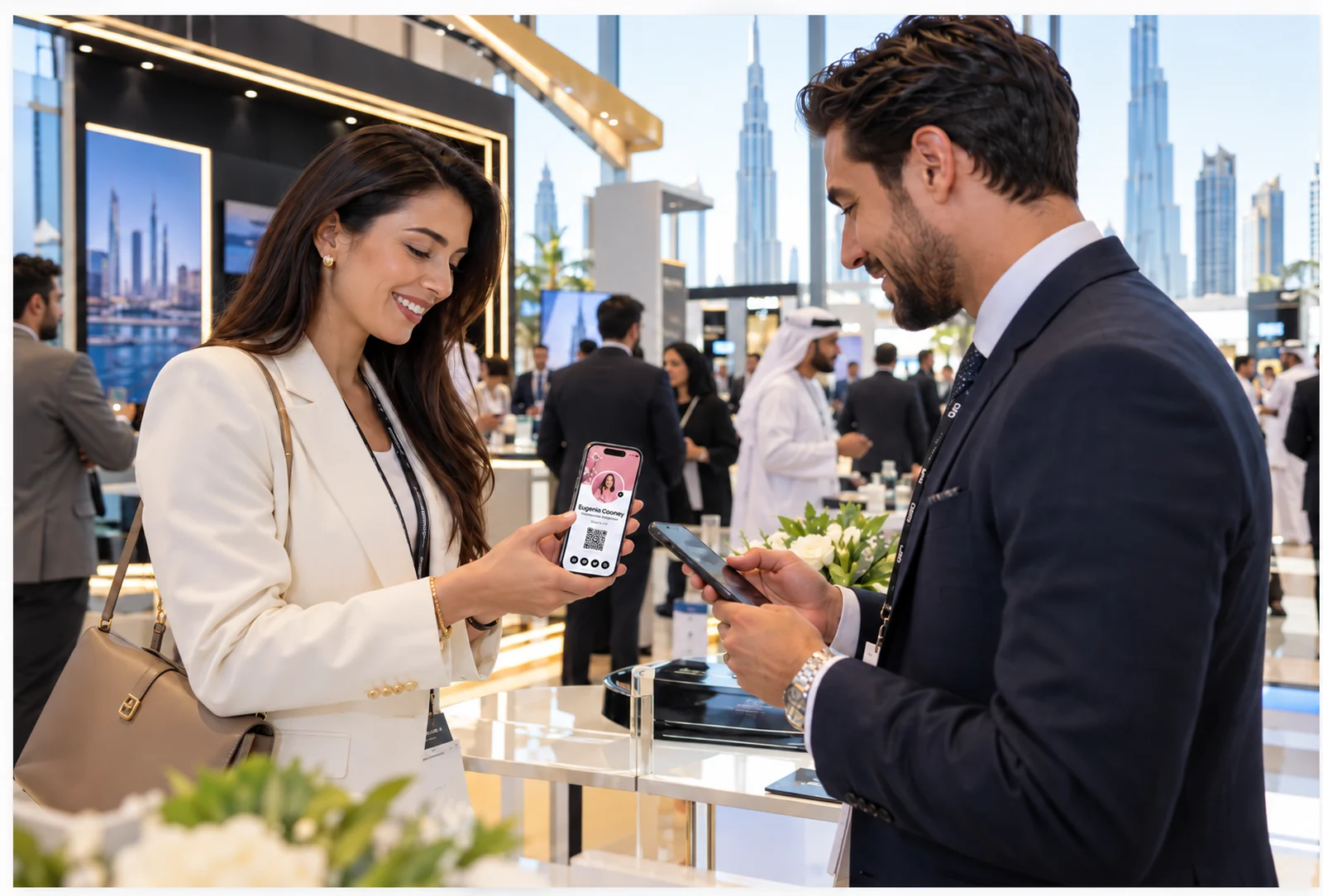
Business cards are still part of professional networking in Dubai.
But keeping track of them after a busy event isn't always easy.
Some end up in pockets. Others get photographed and forgotten. Names are saved on phones without any reminder of where the conversation happened.
offer a more convenient way to share information.NFC Business Cards and QR Codes.
An
NFC business card lets someone open your digital profile by tapping a compatible smartphone against the card.A QR code works differently. The person scans the code using their phone's camera to open your profile.
Both methods can make sharing your contact information easier.
Your profile may include your name, phone number, company website, social links and other business details.
But there's one thing worth remembering.
Just because someone opens your digital business card doesn't mean you've captured their contact information.
You still need to give them a clear and appropriate way to share their details if they want to stay connected.
Remember the Conversation, Not Just the Name.
Imagine meeting two people named Ahmed at the same exhibition.
One wants a product quotation. The other is looking for a potential distribution partner.
If you save only their names and numbers, those conversations become difficult to separate later.
A short note makes a big difference.
Something as simple as "Interested in pricing for 20 employees" or "Wants to discuss a distribution partnership next week" gives your team a useful starting point.
Keep notes relevant and respectful. There's no need to collect personal information that doesn't help with the agreed business purpose.
4. Give Every Good Conversation a Clear Next Step.
Here's a common situation.
You meet someone, have a great conversation and exchange details.
Before leaving, you both say, "Let's stay in touch."
And then nothing happens.
Nobody is necessarily avoiding the other person. There just isn't a clear reason to continue the conversation.
A better approach is to agree on something specific.
For example:
"Would you like me to send you a short company profile and arrange a call next week?"
Or:
"If you're available, I can organise a product demonstration after the exhibition."
Now there's an actual reason to get back in touch.
Not every conversation needs to end with a sales meeting. Sometimes the next step is simply sharing useful information or introducing someone to the right colleague.
The important thing is to make a commitment you can keep.
5. Keep Your Leads Organised While the Event Is Still Fresh.
At a small networking breakfast, you might meet five or six people. Remembering those conversations is usually manageable.
At a three-day exhibition, your team could speak with many more.
One employee collects business cards. Another saves numbers on WhatsApp. Someone else writes notes in a spreadsheet.
By the end of the event, information is scattered everywhere.
That's when a simple
lead management system becomes useful.Ideally, your team should be able to save contact details, record conversations, identify promising prospects and keep track of follow-ups.
A CRM can help with this. Some digital business card platforms also offer tools for lead capture and contact management.
A Smarter Way to Manage Business Connections.
is a digital business card and business networking platform with NFC and QR-based contact sharing.It also offers lead capture, contact management and follow-up features designed to help professionals manage business relationships beyond the first introduction.
For teams attending exhibitions in Dubai, this can help keep networking and contact management connected.
Instead of relying on a collection of paper cards and separate notes, businesses can explore tools that support contact sharing and follow-up planning in one workflow.
The
ELPHATAP networking and lead management features provide an example of how technology can support this process.Of course, a digital tool won't turn every person you meet into a customer.
It simply gives you a better chance of keeping track of conversations that deserve your attention.
6. Know Which Leads Need Attention First.
Not everyone you meet at an exhibition is ready to buy.
Some people are exploring their options. Others are gathering information for a project that may happen months later.
You might also meet potential partners who aren't customers but could still become important business connections.
Treating everyone the same rarely works.
A simple way to organise contacts is to ask yourself:
Does this person have a clear need we can help with?
Are they planning to make a decision soon?
Did they ask for a quotation, meeting or demonstration?
Is there a useful reason to stay connected?
For someone who needs a proposal urgently, arrange the next conversation promptly.
For a person researching future options, send the information they requested and agree on an appropriate time to reconnect.
And when you meet someone with no immediate business requirement, there's nothing wrong with simply maintaining a professional relationship.
Good networking doesn't have to produce an immediate sale to be worthwhile.
7. Follow Up Like a Person, Not a Marketing Campaign.
You know those emails that begin with, "It was a pleasure meeting you at our exhibition stand," followed by a long list of services?
They're easy to send. They're also easy to ignore when they don't refer to the actual conversation.
A better follow-up sounds like something one professional would naturally send to another.
For example:
"Hi Sarah, it was good meeting you at the Dubai exhibition. You mentioned that your team was reviewing new suppliers for your Abu Dhabi office. I've attached the information we discussed. Would Thursday work for a short call?"
It's personal, relevant and easy to answer.
You don't need a long message.
You need to remind the person who you are, what you discussed and why you're contacting them.
When Should You Follow Up?
If you promised to send something on a specific day, send it when you said you would.
Otherwise, reviewing contacts and sending relevant messages within the next few business days is a practical approach.
Someone who needs an urgent quotation should receive attention sooner than a person who suggested reconnecting next month.
Respect the contact's preferred communication channel. If someone agreed to WhatsApp, a short message may be suitable. If they prefer email, use email.
And if a person isn't interested, don't keep sending unwanted sales messages.
8. Measure What Actually Came From the Exhibition.
After an event, businesses often talk about how many people visited the stand.
It's a useful number, but it doesn't tell the whole story.
What happened to those conversations afterward?
How many people requested a meeting? How many asked for pricing? Did any discussions turn into real projects?
Consider a simple example.
Your team speaks with 70 visitors. Twenty seem relevant to your services. Eight request another conversation, and three ask for proposals.
These are hypothetical numbers, but they show why contact quality matters.
A smaller exhibition with fewer visitors may produce stronger opportunities than a large event where most conversations are unrelated to your business.
The only way to understand the difference is to track what happens after the event.
9. Common Mistakes That Can Cost You Good Leads.
Most exhibition lead-generation problems aren't caused by one dramatic mistake.
They're usually small things that add up.
Collecting business cards without notes.
By the following week, you may struggle to remember what each person wanted.Talking too much.
A long sales pitch leaves little time to understand the visitor's needs.Forgetting promised information.
If someone asks for a quotation or brochure, make sure it reaches them.Sending the same message to everyone.
A personal follow-up is more relevant than a generic sales email.Having no clear person responsible.
When several employees handle leads, decide who should manage each next step.Ignoring privacy.
Be clear about why you're collecting contact details, use an appropriate legal basis and respect people's communication preferences.None of these problems requires a complicated solution. Often, a clearer routine is enough.
10. Your Next Dubai Exhibition Checklist.
A simple plan can help your team stay organised from the first day to the final follow-up.
Before the Event
Decide which businesses and professionals you want to meet.
Prepare a short introduction about what your company offers.
Test your business cards, QR codes and lead capture tools.
Agree on how your team will record contact details.
Assign responsibility for following up.
During the Event
Start conversations with useful questions.
Listen before presenting your services.
Collect contact details with permission.
Save a short note about each meaningful conversation.
Agree on a next step when it makes sense.
After the Event
Review your contact list while conversations are fresh.
Send promised information.
Arrange meetings with interested prospects.
Keep track of responses and pending actions.
Review the results before planning your next exhibition.
You can use this approach at a major event at
Dubai World Trade Centre or a smaller business gathering elsewhere in the UAE.Frequently Asked Questions
How can I get more leads at Dubai exhibitions?
Start by identifying your ideal customers. Ask visitors about their needs, collect details with permission and agree on the next step before they leave.
What's the best way to collect leads at a trade show?
Choose a method that's easy for your team to manage. Digital forms, organiser-approved badge scanners and contact management tools can all help, depending on the event.
Are NFC business cards useful for Dubai networking events?
Yes. NFC cards can make contact sharing easier with compatible smartphones. However, you still need a way to capture the other person's details if they agree to share them.
How soon should I follow up after an exhibition?
Follow the timeline you agreed on. If there wasn't one, a relevant message within the next few business days is a reasonable starting point.
Can I use WhatsApp for business follow-ups in Dubai?
You can use WhatsApp when the person has agreed to communicate through that channel and your messages comply with applicable privacy and marketing requirements.
Do small businesses need a CRM for exhibitions?
Not always. A small team can begin with a well-organised contact list. A CRM or lead management platform may become useful as your contact volume increases.
How do I know whether an exhibition was successful?
Look beyond visitor numbers. Track qualified prospects, meetings arranged, proposals requested and business opportunities that developed after the event.
Final Thoughts.
Dubai exhibitions can introduce you to customers, partners and business opportunities you might never find through ordinary outreach.
But exchanging a business card is only the beginning.
The real work happens when you remember the conversation, understand what the person needs and follow through on your promises.
You don't need to chase every contact or turn every introduction into a sales pitch. Focus on people you can genuinely help and give those relationships time to develop.
If you want to simplify how your team shares contact information and manages business connections, take a look at
how ELPHATAP works.The best outcome from an exhibition isn't a full contact list. It's leaving with a few meaningful conversations that have a reason to continue.
Reader Reaction
Was this article useful?
0 readers like this article.
Share This Article
Found this story useful? Share it with your network.
Comments
0 discussionsAdd your perspective, reply to other readers, and keep the conversation useful.
Conversation
Reader responses