
How to Build a Strong Business Network in Dubai & UAE in 2027
Meeting people is the easy part. This guide to business networking in Dubai and the UAE covers choosing events, making a strong first introduction, using digital business cards, and following up before the conversation goes cold.

Here’s something you pick up fast in Dubai: a “quick coffee” rarely stays quick. One chat leads to another, and suddenly you’re talking real business. Founders, investors, executives and specialists from every industry keep crossing paths here, whether it’s at a conference, an exhibition, a meeting or a community event.
But meeting people is the easy part. Building relationships that actually go somewhere takes consistency, real curiosity, and a bit of a plan.
Business networking in Dubai and the UAE
is also shifting as we head into 2027. Digital tools and smarter ways of managing contacts are becoming part of the routine. The handshake still matters. But what you do after it often decides whether a connection turns into something valuable.So whether you’re launching a company, widening your client base or looking for partners, here’s how to make your networking count. You’ll find a pre-event checklist and a simple follow-up schedule further down that you can copy and use straight away.
Why Business Networking in Dubai Matters So Much
Dubai pulls in business owners, seasoned professionals, entrepreneurs and decision-makers from all over the world. That mix is a gift. You swap ideas, test partnership possibilities and pick up how other industries really work.
Still, being surrounded by potential connections doesn’t grow your business on its own.
Picture this. You go to an exhibition, chat with fifteen interesting people and trade details with all of them. A week later, you can place maybe three of those conversations. The rest are just names in your phone with nothing behind them.
Most of us have been there.
Good networking isn’t about collecting the most contacts. It’s about building relationships with the right people and giving those relationships a reason to continue.
In the UAE, that usually means pairing real face-to-face time with organized follow-ups and digital networking tools.
Know What You’re Actually After
Before you sign up for another event, ask yourself what you want out of it.
Clients? Business partners? Other founders in your field? Or maybe you just want to learn from people further down the road than you are.
Your answer should shape where you go and who you approach. A tech startup founder might want investors, developers and mentors. A real estate consultant would probably look for property developers, investors and people in related services.
You don’t have to turn every chat into a sales opportunity, either. Showing genuine curiosity tends to build better relationships than launching into a pitch.
Here’s a quick way to turn a vague wish into a goal. Finish this sentence:
“By the end of this quarter, I want to have [number] real conversations with [type of person] so that I can [outcome].” For example: “...five real conversations with property developers so that I can find two potential referral partners.” It’s small, it’s measurable, and it tells you which events to say yes to.Pick Networking Events in Dubai That Fit Your Industry
Dubai has no shortage of exhibitions, conferences, professional gatherings and industry events through the year. Not all of them will be worth your time.
You can explore the
official Dubai World Trade Centre events calendar to find exhibitions and conferences relevant to your industry. The Dubai Chamber of Commerce is another good place to look for business community activity.For more practical advice, explore our guide on how to capture more leads at Dubai exhibitions and networking events.
A huge international exhibition can give you great exposure, while a smaller industry meetup may lead to better conversations. It depends on what you’re after.
When you’re weighing up an event, ask yourself:
Will my target customers or partners be there?
Is there room for real conversation, or is it all presentations?
How relevant are the industries taking part to what I do?
Can attendees reconnect after it’s over?
A simple pre-event checklist
Do a little homework before you arrive. Look into the event’s focus, check which organizations are taking part where you can, and have a short intro ready that explains what you do. Before you walk in, it helps to have:
One clear goal for the day (for example, “meet three potential partners”).
A shortlist of people or companies you’d like to talk to.
A one-sentence intro and two questions you can ask anyone.
Your digital card or QR code ready on your phone.
A slot in your calendar for follow-ups within 48 hours.
And leave yourself time to listen. One good question can open up a better conversation than any rehearsed pitch.
Make Your First Introduction Stick
You don’t need anything elaborate. Say what you do, who you help and why it matters, and you’re most of the way there.
“We provide business solutions” tells people nothing. Name the specific problem you solve instead. A marketing consultant, for example, could say, “I help growing businesses turn their website visitors into qualified enquiries.”
That’s easy to grasp, and it gives the other person something to respond to.
A useful template is:
“I help [who] do [what], so they can [result].” Say it out loud a few times before the event. If it sounds stiff, loosen it until it sounds like you.Then ask about their work, what they’re focused on right now, or what’s tough in their industry. Don’t spend the whole time talking about your own company. People remember a good exchange far longer than a long speech about someone’s services.
One small tip on etiquette: in a city this international, greeting styles vary from person to person, so follow the other person’s lead.
Digital Business Cards Make Sharing Details Easier
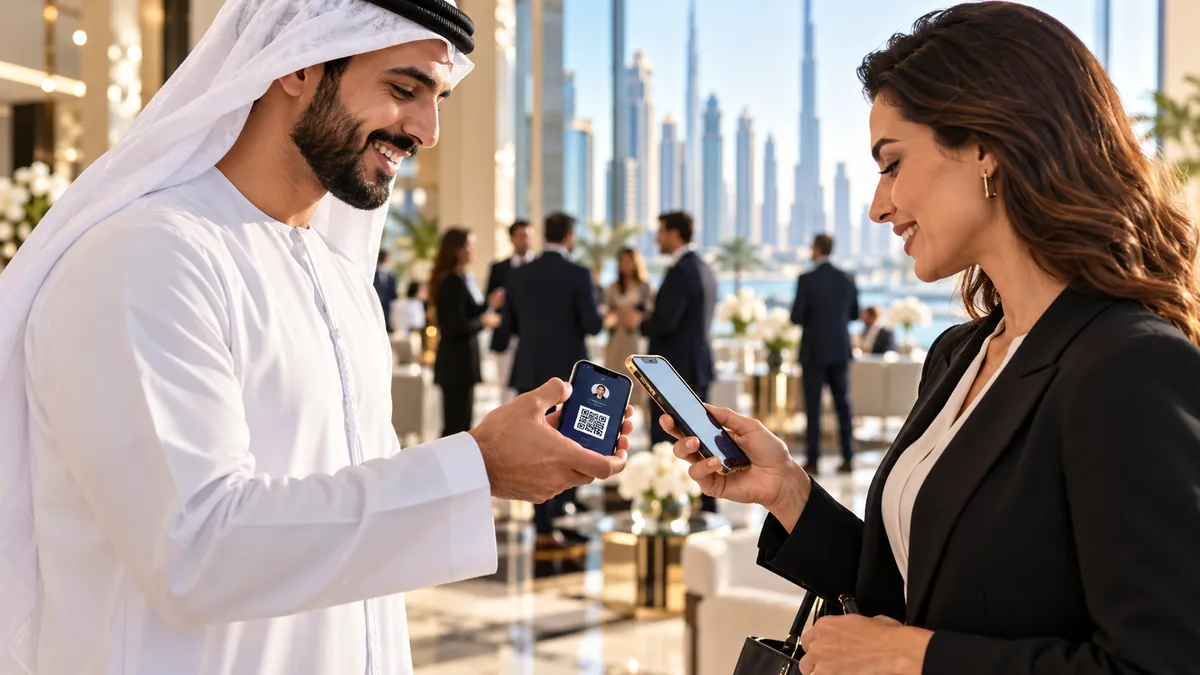
Printed cards are familiar, sure. They also get lost, go out of date, and someone still has to type the details into their phone later.
Digital business cards give you another route. Depending on the platform, you can share your details through NFC, a QR code or a digital profile. At a busy exhibition, where conversations are quick and the room is loud, that’s a real convenience. You don’t ask anyone to type your number or email. You just hand them an easy way to get your details.
Platforms such as
ELPHATAP pair digital contact sharing with business networking features, so professionals can swap information and keep the connection going after the first hello. If you want to widen your circle, ELPHATAP People is a way to explore professional connections within the platform.Whichever tool you use, test it before the event. Check that the QR code scans, the details are current and the profile loads quickly on a weak connection.
The technology isn’t the point. What matters is how easily an introduction can become a relationship.
Follow Up Before the Conversation Goes Cold
This is where most people drop the ball, and it happens after the event.
You have a promising chat with a potential client, you swap details, you both say you’ll stay in touch. Then work gets busy and nothing happens.
A timely follow-up fixes that. Try to send a message within a day or two, while the chat is still fresh in both your minds. Keep it personal. Bring up something you actually talked about, pass along a useful resource if it fits, or suggest what happens next.
Something like: “It was great meeting you at the event yesterday. I enjoyed our conversation about expanding into the UAE market. I’d be happy to continue our discussion over coffee next week.”
That lands far better than a generic sales email sent to everyone you met.
A follow-up rhythm you can copy
Treat these as a starting point, not a rulebook. A warm lead might need a quicker pace, and a casual contact might need less.
Once you’re juggling a lot of connections, remembering who said what gets tricky. Tools with
lead capture and follow-up features, including the ones available through ELPHATAP, can help you keep it all straight. Even a simple note on each contact (“met at X, talked about Y, next step Z”) makes a big difference.Technology can make follow-up easier. But the message still has to sound like you.
Build Relationships Outside the Event Circuit
Some of your best connections won’t come from a big conference at all. They’ll come from everyday moments: a chat with a supplier, a recommendation from a client, an intro from someone you both know.
A strong network means keeping relationships going even when there’s no deal on the table. Share something useful. Congratulate people when they hit a milestone. Introduce two people when you think they’d get something out of meeting.
Little gestures like these add up. Over time, they build your credibility.
A real network isn’t a contact list. It’s a community of people who understand what you do, trust how you work and feel comfortable recommending you.
Look at Smarter Ways to Connect in the UAE
More and more, digital platforms are helping people find communities, share information and manage their connections. For busy entrepreneurs, that’s a way to stay in the loop between events.
ELPHATAP is one example, combining smart business cards with a wider professional networking ecosystem. Its
business networking events experience may interest anyone who wants to find more chances to meet people.That said, choose a platform based on what you need, not what’s trendy. Find out if people actually use it. Make sure the features work for how you do things. And check that the people you want to meet are on there.
A platform should help you build relationships. It can’t build them for you.
Networking Mistakes Worth Avoiding
Even people who’ve been doing this for years get it wrong.
The usual suspects: showing up with no real goal, talking more than listening, treating everyone like a sales lead, and never following up. Oh, and counting contacts like they’re points on a scoreboard.
Meeting fifty people doesn’t automatically beat having five solid relationships. Look for people who are relevant, where both sides get something out of it, and keep in touch.
Frequently Asked Questions About Business Networking in Dubai
How can I build a professional network in Dubai?
Start with industry events, professional communities, personal introductions and digital networking platforms. Look for people who share your interests, and don’t disappear after the first meeting.
What’s the best way to start networking in Dubai if I’m new?
Pick one or two events in your own industry rather than going to everything. Set a small goal, like three real conversations, and follow up with each person within a couple of days. Introductions from people you already know can also open doors faster than cold approaches.
Are digital business cards useful for networking?
Yes. They make swapping details a lot easier, especially at conferences and business meetings. The catch is that they only work if the other person can open and save your details without any hassle.
Do I still need printed business cards?
It depends on your industry and the people you meet. Some professionals like having a printed card as a backup, and others rely entirely on digital sharing. Carrying both covers either preference.
How often should I follow up with a new business contact?
A personal message within a day or two is a good place to start. After that, get in touch when you’ve got a real reason to, not just to keep your name in their inbox.
What makes business networking successful?
Trust, real conversations, steady follow-ups and giving value to others. How good your relationships are matters far more than how long your contact list is.
Final Thoughts
Building a strong business network in Dubai and the UAE in 2027 takes more than showing up at events and trading contact details.
The people who get the most out of networking tend to be curious in conversation, steady about keeping relationships going, and sensible about the tools they use. Digital business cards, organized contact management and platforms like ELPHATAP can make all of that a bit easier.
But the foundation hasn’t changed:
business grows through meaningful connections, trust, and a willingness to create opportunities for others as well as yourself.So start with one good conversation. Follow up on it. Build the relationship. Your next opportunity could come from someone you already know.
Reader Reaction
Was this article useful?
1 reader likes this article.
Share This Article
Found this story useful? Share it with your network.
Comments
0 discussionsAdd your perspective, reply to other readers, and keep the conversation useful.
Conversation
Reader responses