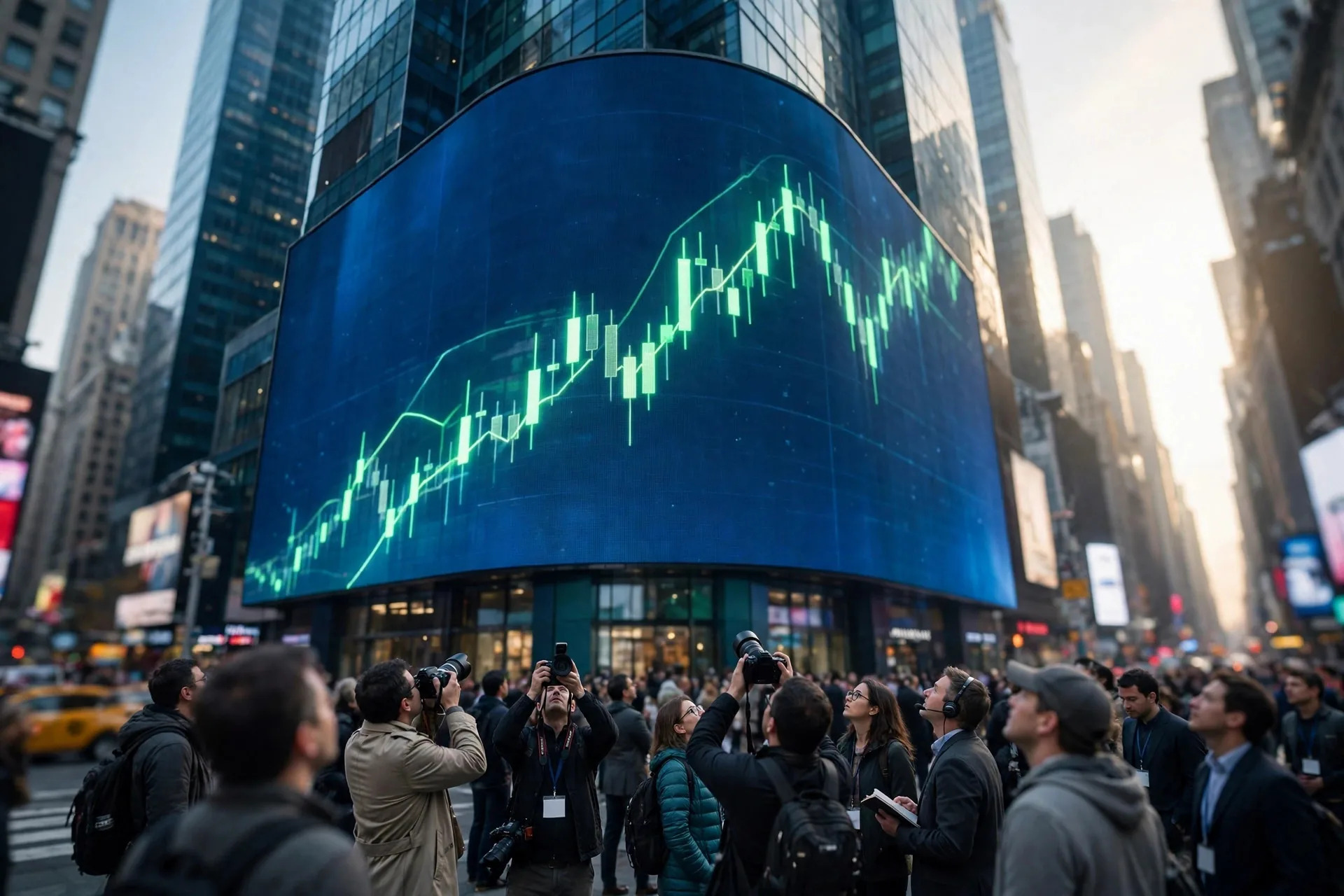
Eighty-one billion dollars.
Sit with that number for a second. That is what investors have just handed a company that did not exist five years ago, in the largest stock market debut ever priced. The company is Anthropic. You probably know its product better than its name. Claude, the AI assistant, is the product. Anthropic is the San Francisco lab behind it, and as of today it is a public company.
The shares were priced on Wednesday evening at $83 each. That came in above the $70 to $78 range Anthropic had been marketing, which is usually a sign the sellers knew demand was there. Trading starts Thursday 19 November on the Nasdaq. The ticker is ANT. All in, the sale of 980 million shares raises about $81.3 billion, and that edges past the record SpaceX set with its own debut earlier this year.
Anthropic opened at $111.50 on its Nasdaq debut on November 19 — about 34% above its $83 IPO price — before closing its first day at $97.17, still 17% above the IPO price.
So what do you do if you want a piece of it? And should you? The numbers first, because they are genuinely wild. Then the buying mechanics. Then the uncomfortable bits, because there are a few.
Quick answer
Anthropic priced at $83 a share. ANT trades on the Nasdaq Global Select Market from Thursday 19 November 2026, and the price tag on the whole company works out to roughly $1.5 trillion once you count everything on a fully diluted basis. If you wanted shares at the $83 offer price, that door closed on 18 November when the deal priced. From today onwards you buy at the market price like everyone else, through any broker that offers US stocks. Just know that first-day prices on a debut this size can lurch around violently, in both directions.
The Anthropic IPO in numbers
The offer price is $83 a share, against an original range of $70 to $78. There are 980 million Class A shares in the deal. Anthropic itself sold 956.4 million of them and existing stockholders sold the other 23.6 million. Gross proceeds land at about $81.3 billion. Running alongside the IPO is a separate $26 billion private placement, also at $83. Valuation comes to roughly $1.5 trillion fully diluted, or about $1.1 trillion if you strip out options and restricted stock. Goldman Sachs and Morgan Stanley ran the deal, with a syndicate of 22 banks behind them. The underwriters also hold an option to sell up to 147 million extra shares over the next 30 days. And the first day of trading is today, Thursday 19 November, with the offering formally closing on 20 November.
Worth pausing on the size of the thing. Anthropic had originally planned to sell 825 million shares. During the bookbuild that grew by about 19 percent, and Bloomberg reported demand at around six times the shares on offer. Companies do not upsize a deal and price above the range unless the orders are stacked up. They just don't.
Then there is the private placement. Bloomberg reported that Google, Nvidia, AMD, Microsoft, Broadcom, Micron and TSMC are among the strategic investors buying $26 billion of stock at the same price as everyone else. Add that to the IPO money and Anthropic has pulled in something like $107.3 billion in a week. For context, that is more than the annual budget of most mid-sized countries' governments.
What Anthropic actually sells

The company started in 2021. Seven former OpenAI employees walked out and set it up, led by Dario Amodei and his sister Daniela. Their bet was that they could build a rival AI lab with a heavier emphasis on safety research, and for a while that made them the smaller, quieter player next to OpenAI.
That is not the position anymore. Claude is sold two ways. Businesses plug into it through an API, and ordinary users meet it through apps and subscriptions. But the real accelerant, reading the filing, is Claude Code. It is a coding agent, developers took to it fast during 2026, and enterprise contracts followed the developers in.
The revenue line is hard to argue with. For the first nine months of 2026 Anthropic booked $33.24 billion. The same stretch of 2025 brought in $2.55 billion. Third-quarter revenue alone was $16.96 billion, a 47 percent jump on the quarter before. By the end of October the annualised run rate had hit $81 billion, up ten billion in a single month. Customer depth is moving the same way. There were 11,900 customers spending at least $100,000 a year with Anthropic as of 30 September. At the end of last year there were barely 1,500.
The part of the filing worth reading twice
Growth like that is never free, and credit where it is due, the prospectus does not hide the bill.
Anthropic spent close to $9 billion on computing capacity and infrastructure in the first half of 2026. Nearly four times the year before. And the commitments stretch much further than that. The company has signed up for something approaching $900 billion of compute and infrastructure spending over the coming years, a lot of it with Amazon and Google. Nine hundred billion. That is the wager. If demand for AI keeps compounding, those contracts look visionary. If it doesn't, they look like something else entirely.
Profit is not the story yet either. The third quarter showed an operating loss of $567 million, one quarter after the company had posted operating income of $974 million. Numbers that swing like that belong to a business still being built, not a finished one.
The valuation argument ran all autumn. Back in September, the talk was of a price tag near $2 trillion. Then AI stocks sold off, investors started asking harder questions about who pays for all these data centres, and the deal landed nearer $1.5 trillion. Dario Amodei's pitch on the roadshow, as reported at the time, was that the company would rather deliver more than it promised. Make of that what you will. The market starts grading the claim today.
Can you still get Anthropic shares at $83?
Short answer? No. Longer answer, it depends who you are, and for almost everyone reading this the answer stays no.
Shares at the offer price get handed out before trading starts. That process is called allocation, and this deal did something unusual. Anthropic's filing actually named the retail platforms taking part. In the US they were Charles Schwab, Fidelity, Robinhood, SoFi, E*TRADE and TradePMR, with local brokers named for a handful of other markets. Reports put the retail slice at somewhere between 15 and 20 percent of the deal. If you held an account with one of those brokers, you could register your interest before pricing and confirm it once the $83 figure was set on Wednesday evening.
Oversubscribed does not begin to cover what happened next. Plenty of applicants got a fraction of what they asked for. Plenty got nothing. There was no special programme reserving shares for chosen groups, and nobody was promised a fill.
None of which shuts you out. It just changes the price. From the opening bell, ANT is an ordinary listed stock, and ordinary listed stocks can be bought by anyone with the right broker account.
How to buy Anthropic stock now
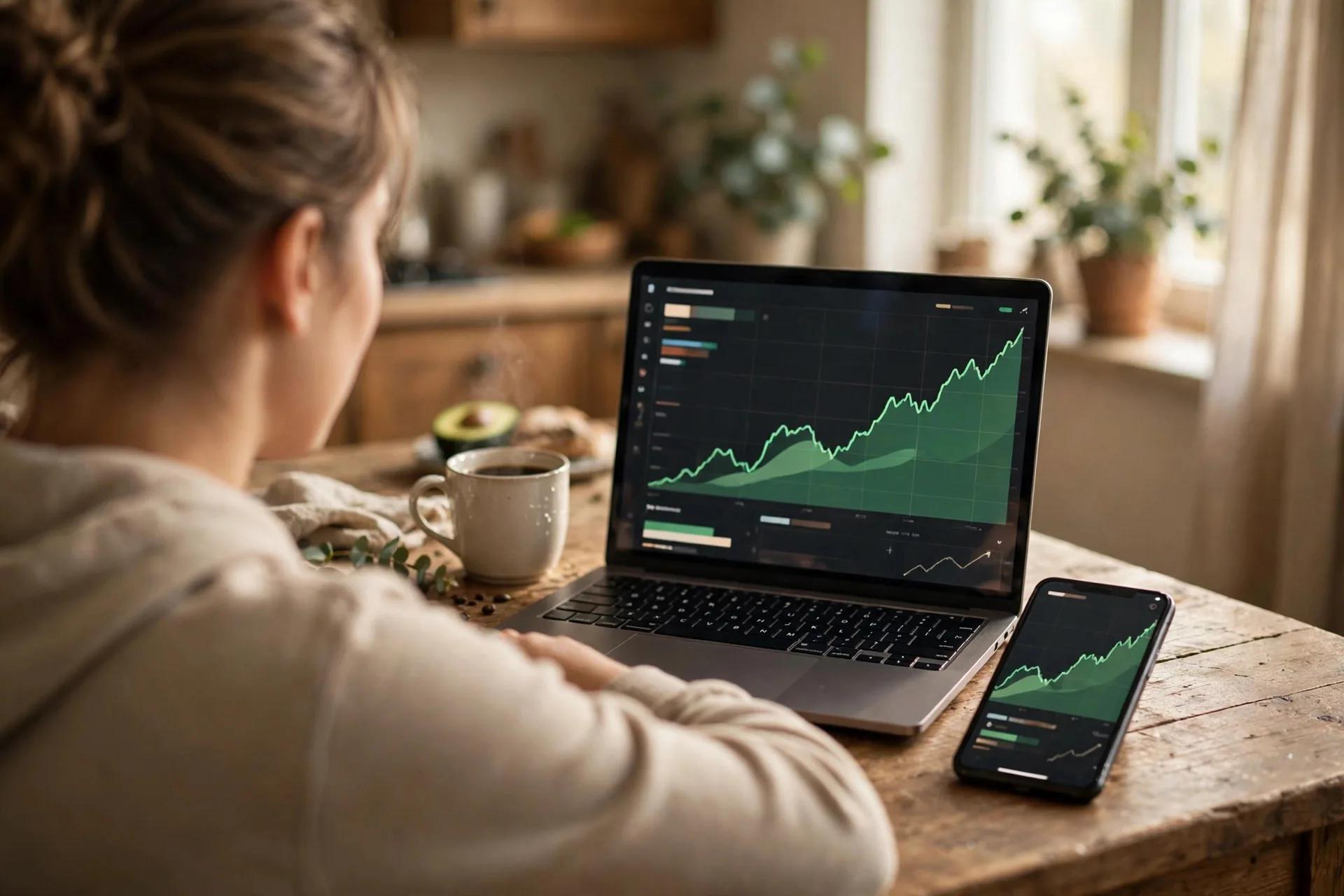
Start with the broker. In the US, take your pick, they all list Nasdaq stocks. Elsewhere it takes one extra check. If you are in the UK, Canada, Australia or Europe, confirm your platform offers US shares and look at what it charges to convert your currency, because ANT trades in dollars and the FX fee is the quiet cost people forget.
Money needs to be in the account before you try to trade. Nasdaq hours are 9:30 in the morning to 4 in the afternoon, Eastern Time. Hot debuts do not pause while a bank transfer clears, and an order placed with unsettled funds can simply bounce.
When you search, type the ticker. ANT. Then check the result properly. You want Anthropic's Class A common stock on Nasdaq. Tickers get mixed up on big days, similar names exist, and clicking the wrong line in a hurry is an expensive habit.
Use a limit order. Seriously, on this one. A market order says buy at whatever price comes next, and on a debut morning the next price can be a long way from the one on your screen. A limit order caps what you pay. Maybe the price runs past your limit and you miss out. On day one, missing out is nearly always cheaper than overpaying inside a spike.
Last thing, and decide it before the bell, not after. How much is this position allowed to be? A fixed amount, a small slice of the portfolio, bought in stages if that suits you better. The stock is not going anywhere. Next week it will have a price history, a few analyst notes and a lot less theatre around it.
What to watch on debut day
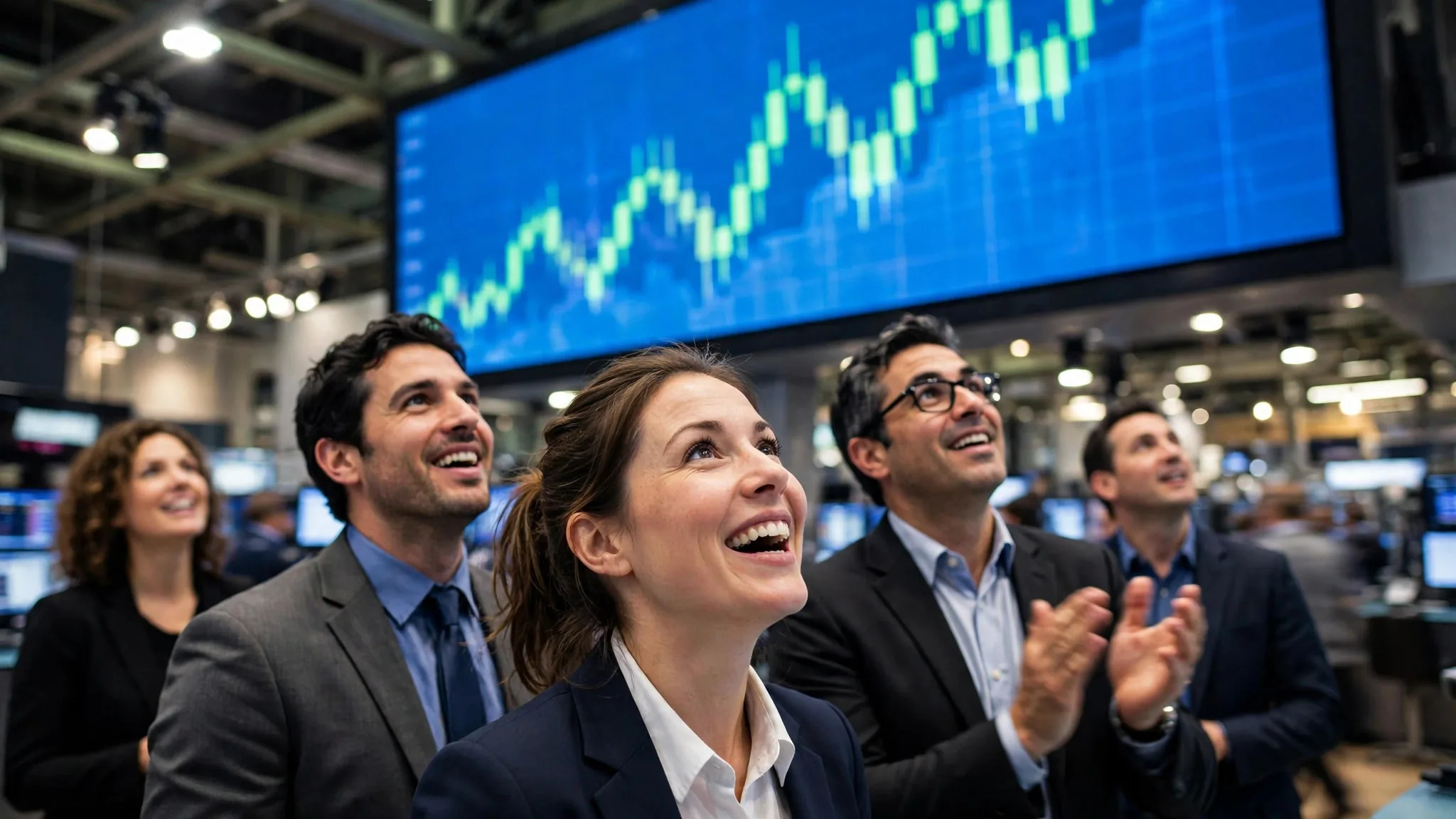
Do not expect a first trade at 9:30 on the dot. For a deal this size the exchange runs an opening auction, gathering orders until it can cross them at a single price. That first print can sit a long way above $83. It can also disappoint. Either way, it tells you what the opening crowd thinks, not what the company is worth.
Volatility is the safest prediction anyone can make today. There is no trading history to lean on. Analysts are publishing first models that disagree with each other. Every business channel will have the ticker on screen. And if the banks exercise that extra 147-million-share option in the coming weeks, more supply arrives, though the market has known about it from the start so it should not shock anyone.
The offering formally closes on 20 November. That is paperwork, not a task for buyers. After it, the story stops being about the deal and becomes about the stock.
Mistakes first-time IPO buyers keep making
Chasing the opening minutes. It is the oldest one in the book. The need to own the famous name right now, at any price, has quietly moved a lot of money from late buyers to the people who were handed cheap allocated shares.
The second is treating $83 as gospel. That number came out of a negotiation between the company, its banks and big institutions, under time pressure, with everyone in the room wanting the deal to work. It is a reference point. Nothing more. It is not a verdict on value that you are obliged to share.
And the third is skipping the homework because the brand feels familiar. The prospectus runs to hundreds of pages. Nobody is suggesting you read all of them at the kitchen table. But the summary and the risk factors, those are worth your evening. The risks in there are not boilerplate either. They cover the compute bill, the competition, and the strange possibility that Anthropic's own models develop abilities faster than the company can test them. The company wrote that about itself.
FAQs
What is Anthropic's stock ticker?
ANT, on the Nasdaq. The listed shares are the company's Class A common stock.
What was the Anthropic IPO price?
$83 a share, set on 18 November 2026. The range it had been sold on was $70 to $78, so it priced above the top.
When does Anthropic stock start trading?
Thursday 19 November 2026, the morning after pricing. The offering itself is scheduled to close on 20 November.
Can I still buy Anthropic shares at $83?
In practice, no. The $83 price belonged to the allocation process, which ended at pricing. On the open market you pay the traded price, and that can be far above $83 or, on a bad morning, below it.
How do I buy Anthropic stock from the UK, Canada or Australia?
Through a broker that gives you access to US exchanges. Most big platforms in those countries do. Budget for a currency conversion fee on top of the dealing charge, and expect to file a W-8BEN form for US securities if your broker has not already got one from you.
Is Anthropic profitable?
Not reliably, not yet. It lost $567 million at the operating level in the third quarter of 2026, straight after a profitable second quarter, and it has committed to nearly $900 billion of compute spending. The growth is real. So is the spending.
How big is the Anthropic IPO compared with others?
The roughly $81.3 billion it raised makes it the largest IPO ever priced, ahead of SpaceX's debut earlier in 2026. Count the side deal too, the $26 billion private placement, and the week's fundraising reaches about $107.3 billion.
Who is behind Anthropic?
Seven ex-OpenAI people founded it in 2021, with Dario Amodei as chief executive. Claude is the product the world knows, and Claude Code, the coding agent, is what has been dragging the revenue curve upward lately.
The bottom line
Strip away the noise and two things are true at the same time. This is a landmark. The first of the big AI labs to go public, the largest debut on record, growing at a speed that would have sounded made up not long ago. It is also a $1.5 trillion price tag on a company that has promised to spend close to $900 billion and has not yet strung together steady profits. Hold both of those in your head when you look at the price, because the second one does not cancel the first, and the first does not excuse the second.
Buying today? Limit order. Sensible size. No heroics in the opening auction. Or skip the debut entirely and watch how ANT settles over its first few weeks, there is no rule that says the first day is the day. If you would rather just follow the story, our Business & Entrepreneurship coverage keeps up with the deals and the earnings that move this market, and the Technology & AI section is where Claude and its rivals get tracked day to day.
This article is general information about a public offering, not financial advice. Share prices fall as well as rise, and IPOs sit at the volatile end of the market. Think about your own position, or talk to a regulated adviser, before putting money in.


Comments
0 discussionsAdd your perspective, reply to other readers, and keep the conversation useful.
Conversation
Reader responses